
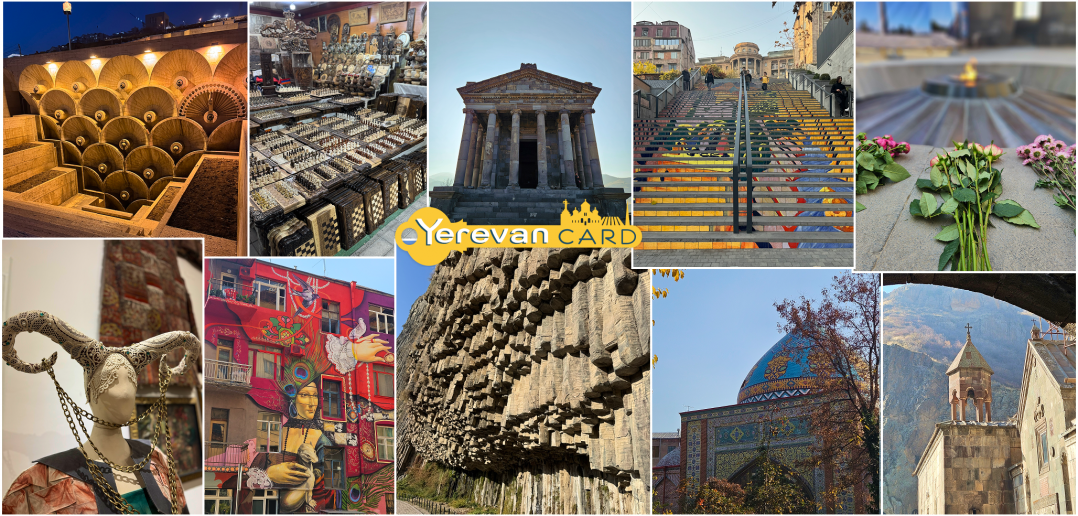
Armenia… Unfortunately – and it is telling in itself that we have to begin a sentence with “unfortunately” – for many people, the first association with this beautiful country will likely be one of the world’s most famous showbiz/reality families. Yet Armenia, and its capital Yerevan, are destinations that offer an extraordinary wealth of culture, gastronomy, and authentic art at the crossroads of Europe and Asia.
At the invitation of Yerevan Card, the city’s smart card system, a four-member Mixeta team ventured into exploring the riches of this small Caucasian country – small in size and population, yet remarkably rich in cultural, religious, and anthropological terms.
When it comes to music, many people instinctively connect Armenia with System of a Down. But Armenia is also the homeland of the legendary composer Aram Khachaturian, the contemporary jazz virtuoso Tigran Hamasyan, and – less widely known – the birthplace of Armand Zildjian, the American heir to the famous family business producing cymbals and drumsticks, whose origins trace back to Istanbul in 1623. And speaking of Istanbul, the life story of priest and musicologist Komitas, founder of the Armenian national school of music, is as fascinating as it is tragic. Still, our visit to Yerevan was meant to explore far beyond music, musical heritage, and the curated narratives offered by a single franchise café.
This trip was a combination of tourism and work. In collaboration with Yerevan Card and all the benefits it offers, we set out to explore what makes Armenia such an authentic and culturally vibrant country – and, perhaps surprisingly to some, the world’s oldest Christian civilization. In addition to standard entry tickets and passes for city attractions, Yerevan Card also provided other benefits such as taxi rides, numerous restaurant discounts, and a local SIM card with internet access – an essential detail for Europeans accustomed to constant connectivity.
Yerevan Card
Yerevan itself is a magnificent capital, home to nearly half of the country’s population – around one and a half million people. Nestled beneath the mythical Mount Ararat and embraced by the Hrazdan River, Yerevan is a perfect blend of European, Soviet, and Asian influences. It is a truly vibrant metropolis, full of life, monuments, and architectural forms I honestly did not expect to encounter – a city of wide avenues, police sirens, and a somewhat wild, fast-paced, Westernized atmosphere.
With only about two days at our disposal, we had to carefully curate our itinerary. The first day was dedicated to one of Yerevan’s most recognizable landmarks.
THE CASCADE COMPLEX
The Yerevan Cascade Complex is an impressive example of Soviet monumental architecture, constructed starting in 1971 based on designs by architects Jim Torosyan, Aslan Mkhitaryan, and Sargis Gurzadyan. Partially completed in 1980 and restored in the 2000s, the structure consists of five terraces connected by 572 steps and stretches 302 meters in length. Built from white tuff stone and decorated with traditional Armenian motifs such as khachkars and vine patterns, it is located in Victory Park, just below the statue of Mother Armenia.
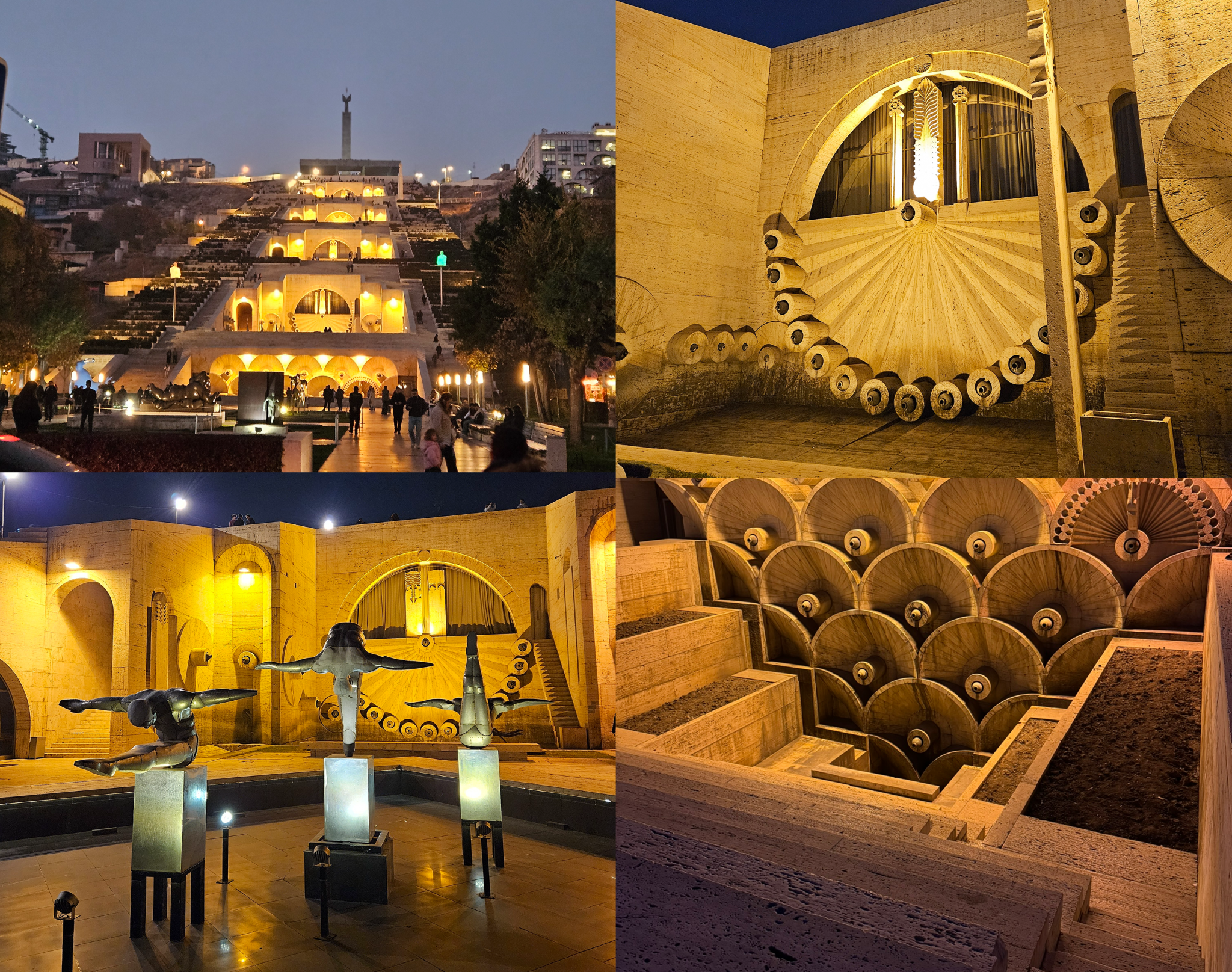
Cascade Complex
The Cascade offers panoramic views of the city and Mount Ararat and houses the Cafesjian Center for the Arts, which hosts contemporary art exhibitions – symbolizing a fusion of tradition, modernism, and urbanism. Perhaps even more intriguing is the sculpture park at its base.
Among the most prominent artists represented in the open-air sculpture museum are Fernando Botero, with works such as Mujer Fumando un Cigarrillo, The Cat, and Roman Warrior; Barry Flanagan, known for his expressive hare sculptures (Hare on a Bell, Boxing Hare on Anvil, Acrobat Hares); and Jaume Plensa, whose Seated Tattoo features a map of the world’s rivers engraved onto a seated human figure.
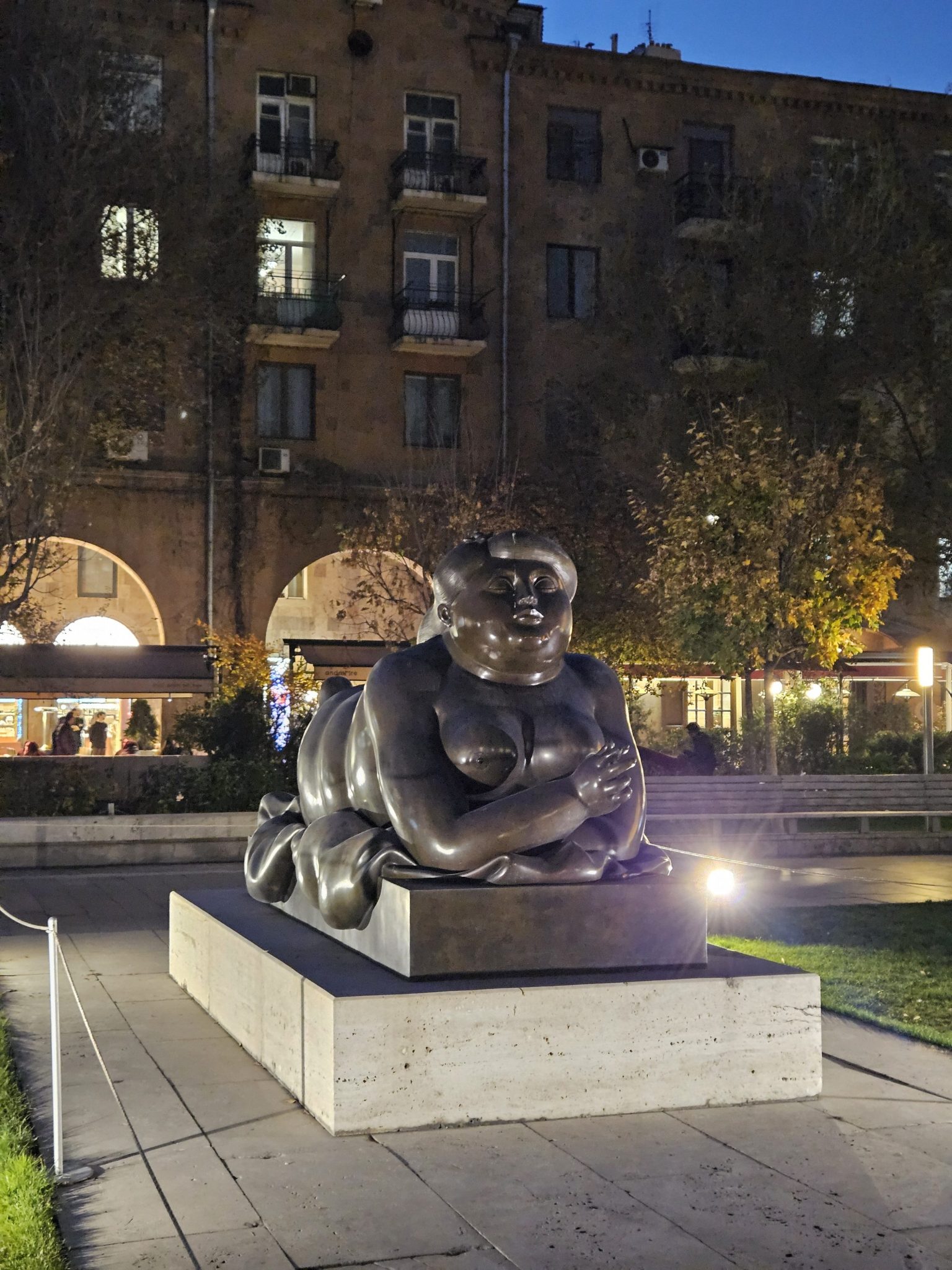
“Mujer Fumando un Cigarrillo”
We ended our first chilly evening in Yerevan at a traditional Armenian tavern – quite literally – where we were introduced to tolma and other staples of the local cuisine for the first time.
SATURDAY, 22/11
Early Saturday morning, we headed to the Yerevan Card offices, where we were welcomed with coffee and cookies and provided with all the information necessary for the journey ahead. We exchanged contacts and connected with the friendly staff, who proved especially helpful in organizing the trip scheduled for the following day.
Our sightseeing began at a place that brings tears to the eyes of many Armenians and reinforces a strong sense of national unity- despite its tragic nature: the Armenian Genocide Museum-Institute.
TSITSERNAKABERD
The Armenian Genocide Museum-Institute (Tsitsernakaberd) in Yerevan is dedicated to the memory of the victims of the Armenian Genocide, carried out by Ottoman Empire security forces under the orders of the de facto ruling triumvirate. The three ministers-autocrats, historically known as the Three Pashas – Talaat, Enver, and Djemal – systematically implemented the genocide between 1915 and 1923, with varying intensity, resulting in the deaths of approximately 1.5 million Armenians.
The first floor houses a library, archives, research center, and lecture hall. The main exhibition space spans over 1,000 square meters and presents photographs, documents, personal testimonies, relics, diplomatic and missionary reports, and visual reconstructions of massacres and deportations. One particularly striking section depicts the three Pashas themselves – whose portraits bear visible damage from sharp objects, a silent testament to enduring anger and grief.
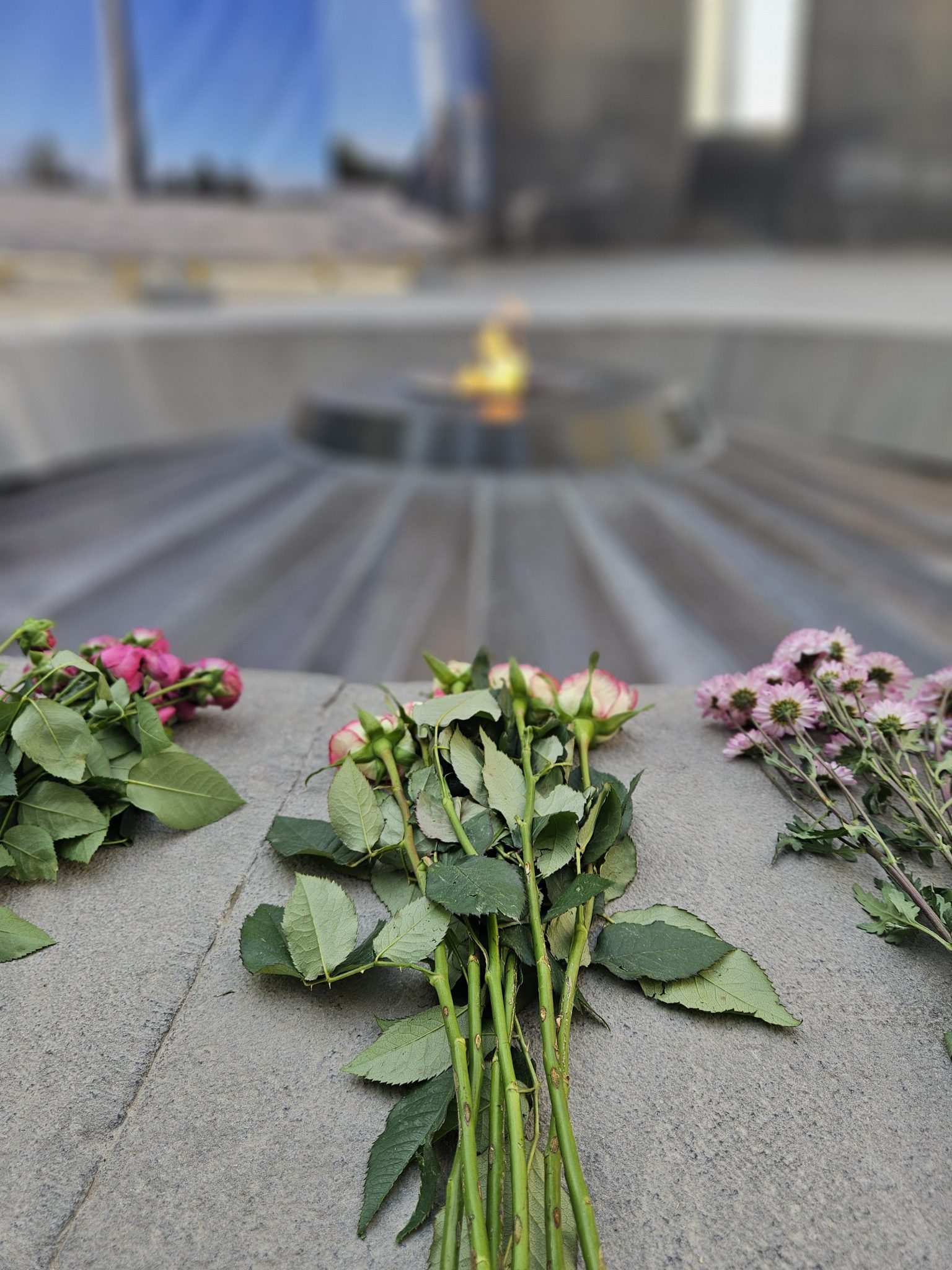
Eternal flame
The museum is part of a memorial complex established in 1967 atop Tsitsernakaberd Hill, featuring an eternal flame and twelve leaning basalt slabs symbolizing lost provinces. The approach to the memorial is lined with countless messages of remembrance and solidarity from diplomats, officials, political leaders, and notable figures from around the world.
After this heavy but necessary reminder of human cruelty – especially poignant in today’s geopolitically tense climate – we sought something lighter. We decided on a visit to Ararat Brewery, but entry required prior reservation even with a Yerevan Card, so we opted instead for a short walk that led us to one of the many house museums dedicated to local artists.
SERGEI PARAJANOV MUSEUM
As a student of film and television directing, visiting the home of one of Armenia’s greatest artists—now a museum—was unavoidable. Sergei Parajanov (1924–1990) was a Soviet film director of Armenian descent, best known for his poetic, visually rich films such as Sayat Nova (1969). His highly original artistic voice often brought him into conflict with the rigidity of Soviet authorities, leading to imprisonment. Today, he is widely regarded as one of the most significant cinematic artists of the 20th century.
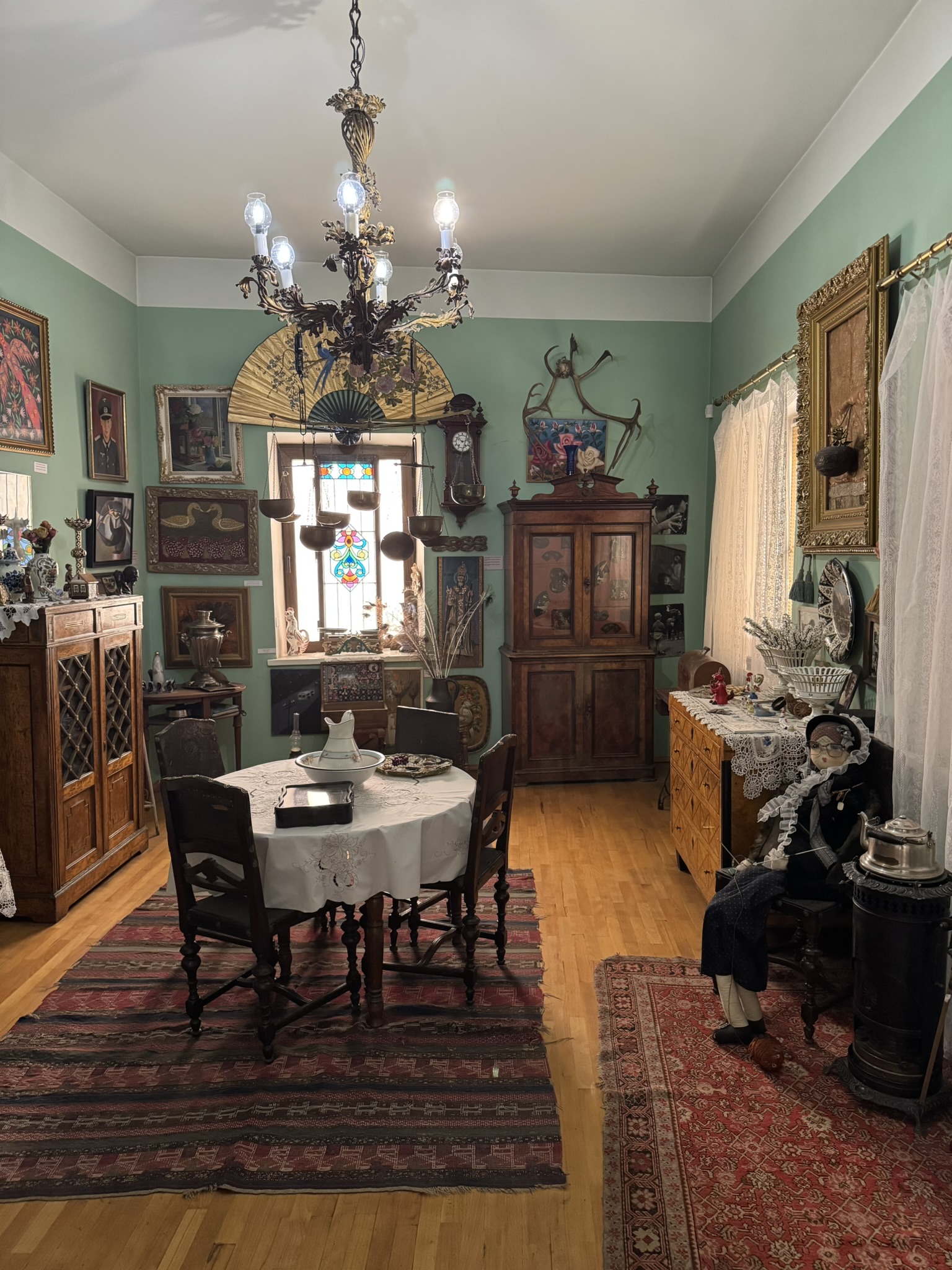
Sergey Parajanov Museum
The house-museum in Yerevan spans two floors and contains over 1,700 items, resembling a true cabinet of curiosities: drawings, dolls, film sketches, installations, personal artifacts, prison works, household items from his homes in Tbilisi and Kyiv, and correspondence with Andrei Tarkovsky and others. The museum also includes memorial rooms (his bedroom and dining room), a small garden, and a wall panel featuring photographs of famous visitors – among them George Clooney and Vladimir Putin.
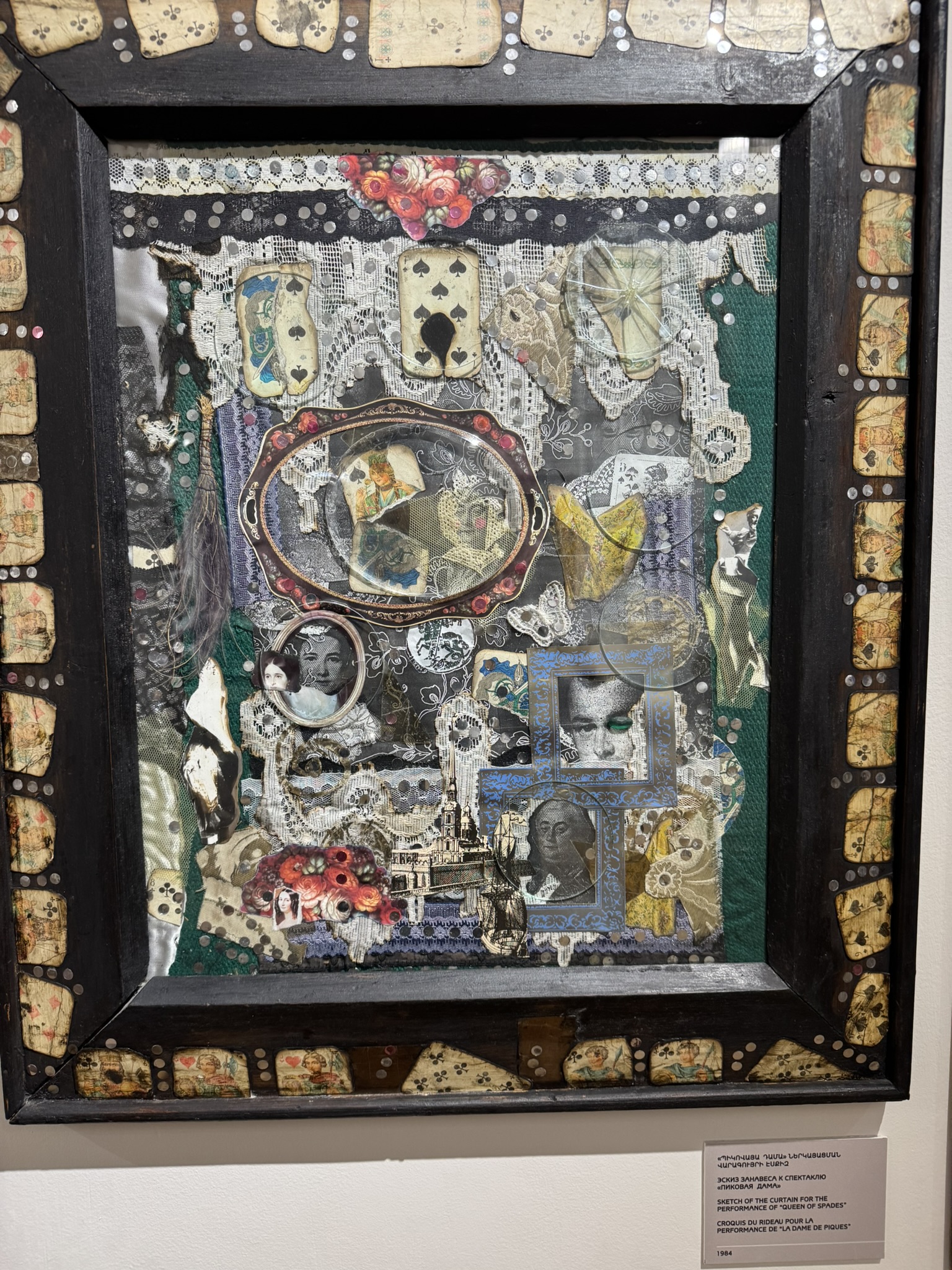
Sergey Parajanov Museum
The remainder of the day was spent in a Caucasian restaurant sampling khinkali and other regional specialties, followed by a walk along the main avenue surrounding the Armenian National Opera and Ballet Theatre. What struck me most were the numerous statues and monuments dedicated to prominent Armenian historical figures.
The city’s vibrancy is further reflected in its abundance of street art and public installations – you constantly pause beside street musicians, watch locals casually playing chess or backgammon, or find yourself tempted to purchase a landscape painting at Yerevan’s open-air art vernissages.
SUNDAY, 23/11
After breakfast, Sunday was reserved for a day trip around Yerevan. While many agencies offer excursions to nearby monasteries, Lake Sevan, and other landmarks, we entrusted the entire logistics to Yerevan Card and Yerani Travel.
Our first stop was Charents’ Arch, a viewpoint where poet Eghishe Charents, later murdered during Stalinist purges, once admired the sweeping Armenian plains and Mount Ararat. Brief, but memorable.
Next came the Garni Temple, the only surviving Greco-Roman (Hellenistic) temple in the region, built around 77 AD during the reign of King Tiridates I and dedicated to the sun god Mithra. A central symbol of Armenian neopaganism and a major tourist attraction, it forms part of a UNESCO-listed area together with the nearby Geghard Monastery. The temple features 24 Ionic columns and remains of ancient baths nearby. Severely damaged by an earthquake in the late 17th century, it was reconstructed in the 1970s. Beyond the temple itself, the dramatic setting above the Azat River gorge is arguably even more impressive.
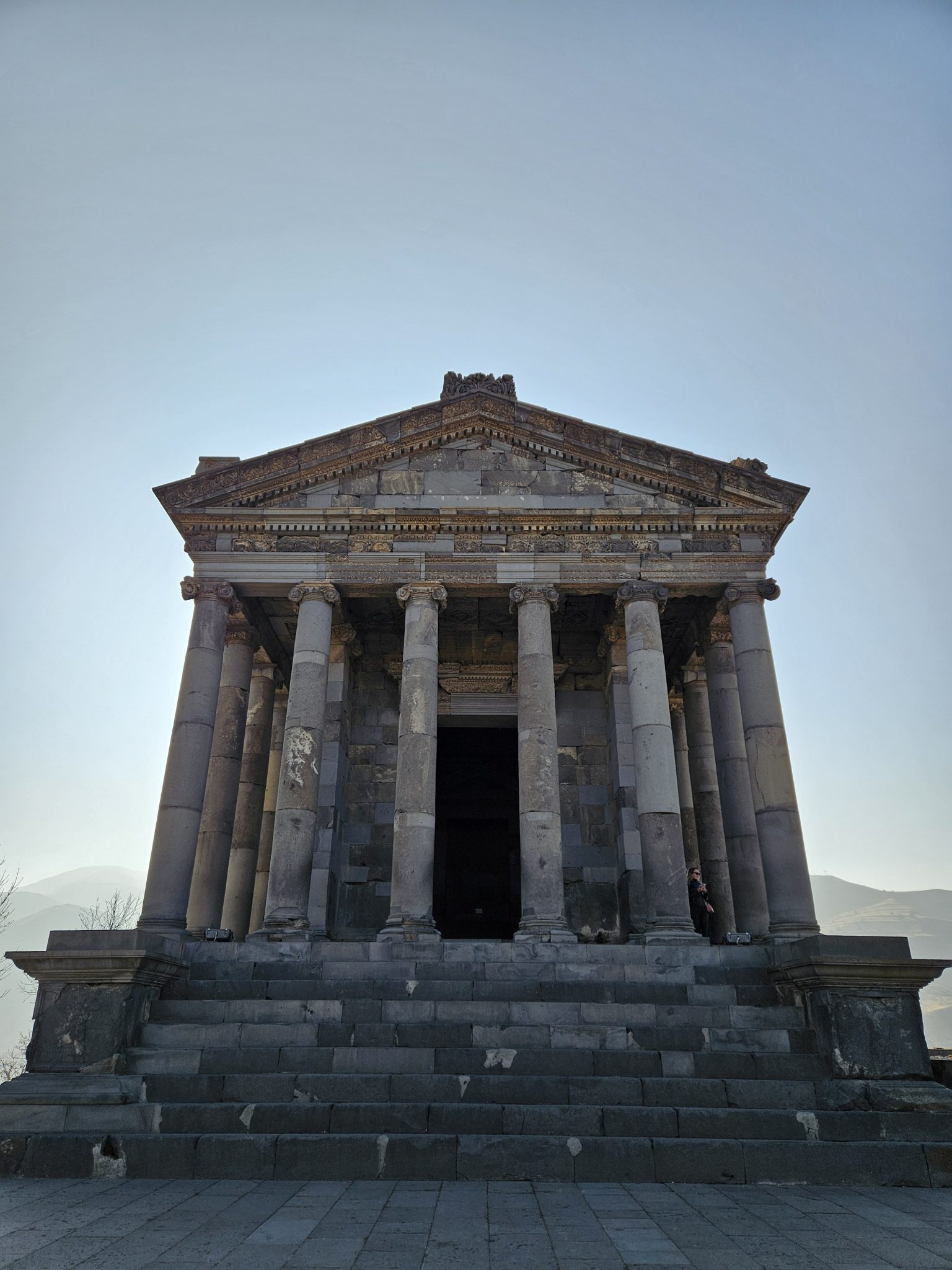
Garni Temple
Continuing along the Azat River, our third stop revealed a natural wonder: the Symphony of Stones, a striking geological formation in a nearby gorge where towering basalt columns – hexagonal and pentagonal, some reaching heights of up to 50 meters – resemble organ pipes, formed by cooling lava over 100,000 years ago.
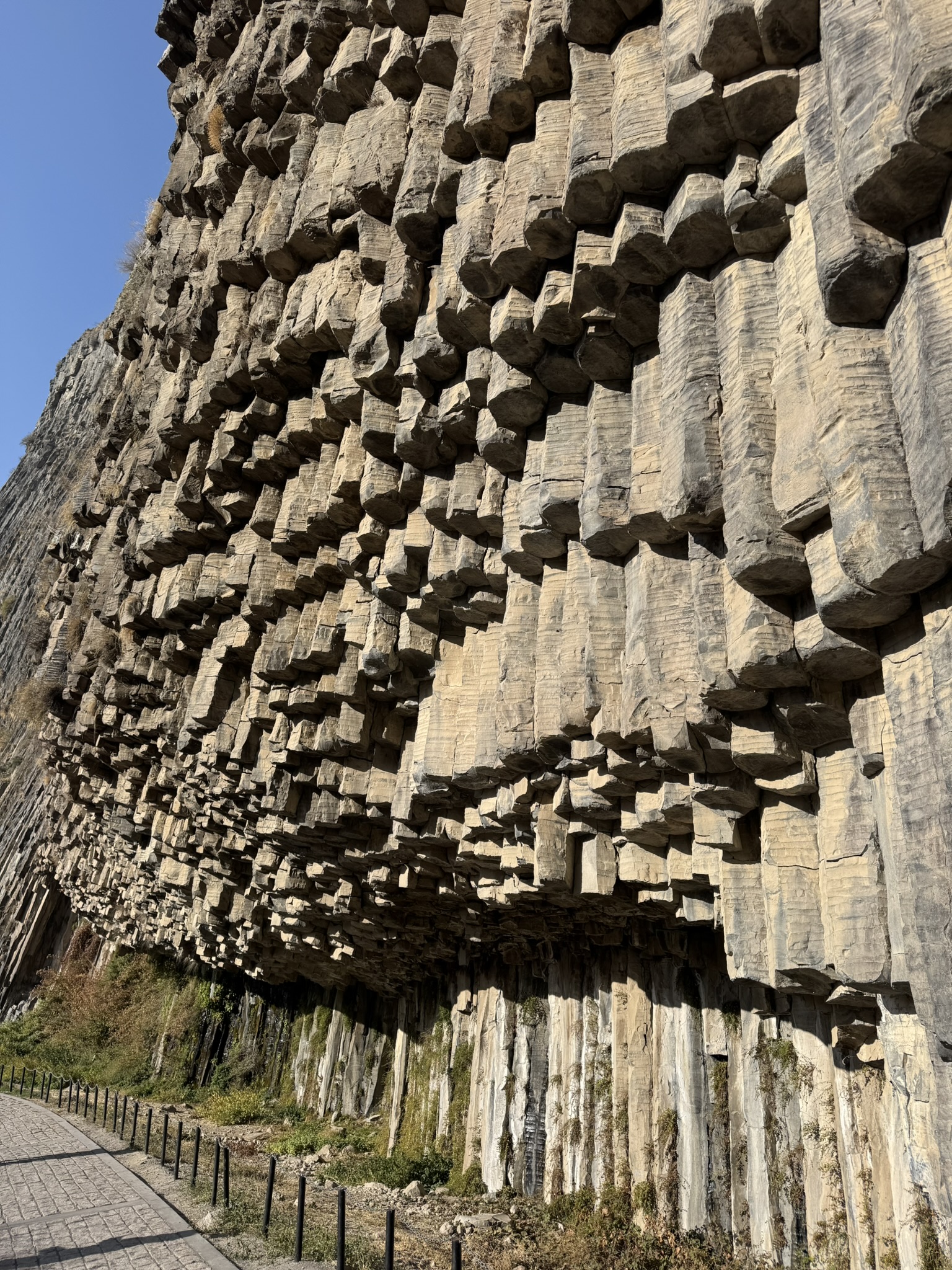
Symphony of Stones
We paused for lunch at a nearby restaurant with a stunning view, where we were treated to a brief demonstration of lavash preparation – traditional Armenian flatbread baked in a distinctive manner – before heading to our fifth and final destination: Geghard Monastery.
Geghard (Geghardavank, “Monastery of the Spear”) is a medieval Armenian monastery founded in the 4th century by Saint Gregory the Illuminator at the site of a sacred spring within a cave in the Azat Gorge. The monastery derives its name from the Holy Lance – believed to be the spear that pierced Jesus’ side. According to tradition, a version of the lance was brought to Armenia by the Apostle Jude Thaddeus and kept at Geghard until the 18th century (it is now housed in Echmiadzin). The monastery’s mysticism is enhanced by the fact that much of it is carved directly into the rock. Still a site of deep spiritual significance, Geghard hosts weddings and baptisms to this day – both of which we witnessed during our visit.
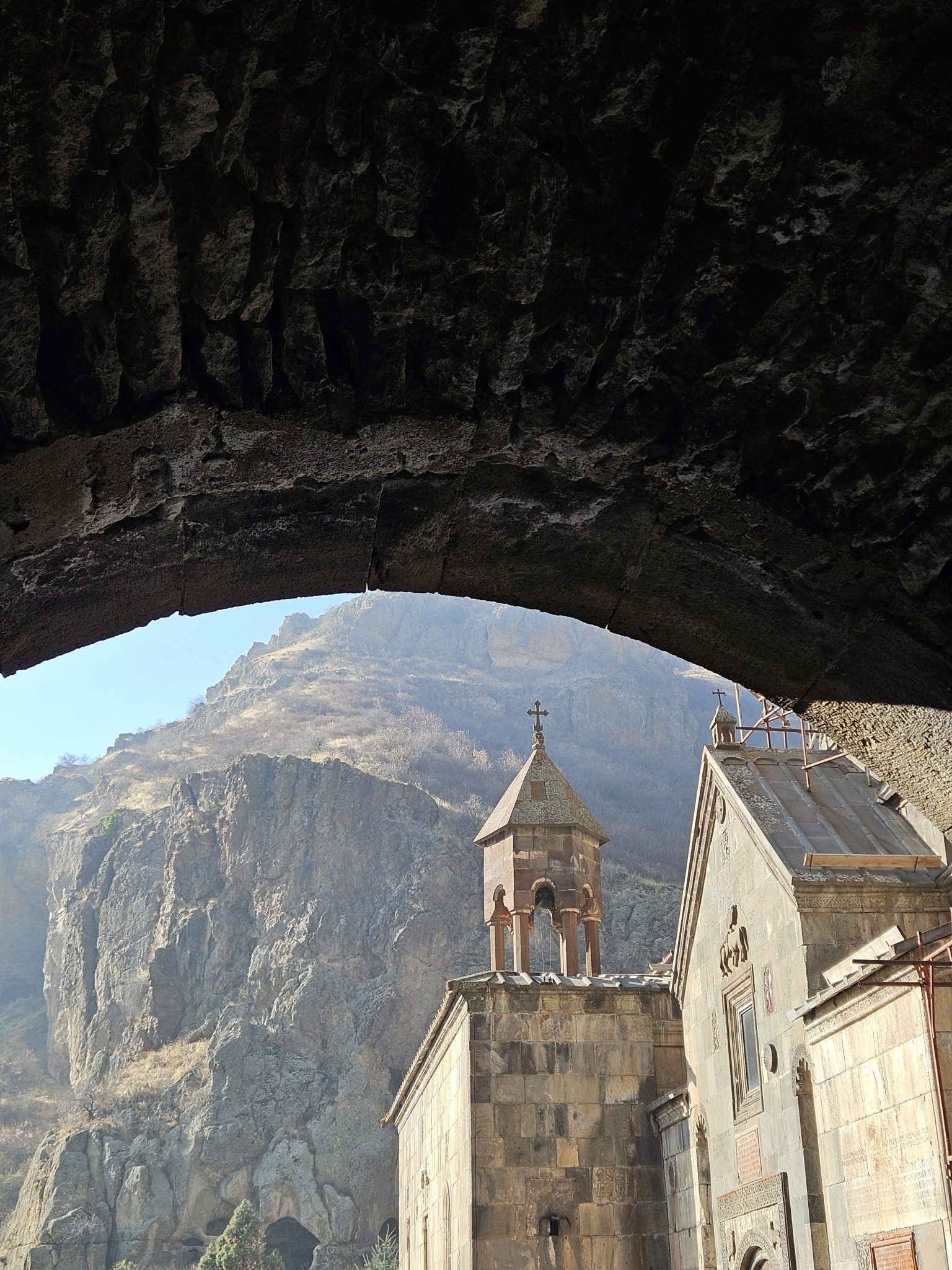
Geghard Monastery
After concluding this rich and engaging tour, we returned to Yerevan. With a small additional fee, it would have been possible to visit Matenadaran, one of the city’s greatest attractions – a repository of ancient manuscripts and one of the world’s richest collections of medieval texts. However, I opted instead to visit the Martiros Saryan House-Museum, which, unfortunately, turned out to be closed despite posted opening hours – clearly a miscalculation on my part.
The evening was spent strolling through the vast Republic Square, home to the parliament and major state institutions, with just enough time left to wander through the Vernissage Market, though sadly it was already nearing closing time.
These nearly three days in Armenia and Yerevan were not enough for me to say I was fully satisfied – or that I had seen enough. For a culture so rich and concentrated within such a small piece of land, a few more days would have made all the difference.



Komentari preko Facebooka